
 1300 11 00 96
The Ultimate Guide to Custom Foam Cutting: Techniques, Materials, and Applications
Author: Evolution Gear Date Posted: 12 February 2026
TL;DR
- Foam inserts are typically specified by material type (closed-cell vs open-cell), density, firmness, water absorption, compression set, and any compliance needs like flammability or ESD control.[1]
- Closed-cell foams (PE, XLPE, EVA, EPP, neoprene/EPDM) generally resist moisture and hold shape; open-cell PU is better for soft cushioning but absorbs water unless sealed.[2]
- Cutting method choice depends on geometry, thickness, volume, tolerance, and edge finish - common methods include CNC knife, die cutting, waterjet, and laser.[3]
- Standards and test methods help compare materials apples-to-apples - density (ISO 845/ASTM D1622), compression (ISO 844/ASTM D3575), compression set (ISO 1856/ASTM D1056), water absorption (ISO 62/ISO 1663), and flammability (FMVSS 302/UL 94 where applicable).[4]
- Laser cutting can deliver clean, repeatable detail on compatible foams, but requires correct ventilation and material screening to avoid fire and hazardous fumes.[5]
Custom foam cutting is an essential process across multiple industries, from packaging delicate electronics to designing comfortable upholstery. Whether for industrial applications or creative projects, understanding the techniques, materials, and best practices of custom foam cutting ensures high-quality results, precision, and efficiency. At Evolution Gear, we provide custom foam cutting for protective cases and equipment storage - and this guide covers the techniques, materials, and decision factors buyers use.
Table of contents
What is custom foam cutting?
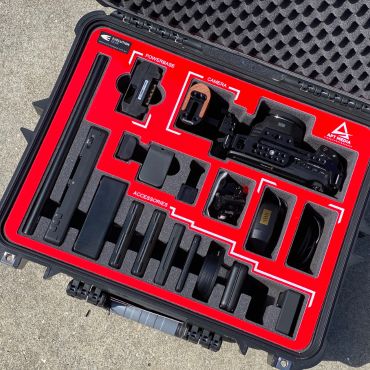
Custom foam cutting is the process of shaping foam into specific profiles, cavities and layers so equipment sits securely, is protected from shock and vibration, and is organised for fast access. It is widely used in protective cases, packaging, tool control, and presentation inserts.
Difference between custom and standard foam cutting
Standard foam is typically supplied as sheets or pre-cut blocks. Custom foam cutting creates fitted pockets and layered assemblies that match the geometry of the items being stored or transported, improving retention and reducing movement that can lead to impact damage.
Foam materials for custom inserts
Foam selection is usually driven by environmental exposure, required stiffness, durability over repeated use, and any compliance needs (flammability, ESD control, hygiene). A key first step is distinguishing closed-cell foams (moisture resistant) from open-cell foams (highly cushioning but more absorbent).
Closed-cell foams
- Polyethylene (PE) - a common closed-cell foam used for protective case inserts due to low water absorption and a broad range of firmness by density.[6]
- Cross-linked polyethylene (XLPE) - typically smoother and more dimensionally stable than non-cross-linked PE; often chosen where a cleaner surface finish and improved consistency are required.[7]
- EVA (ethylene-vinyl acetate) - generally softer and more flexible than standard PE at comparable densities, with strong tear resistance and good shock absorption.[8]
- EPP (expanded polypropylene) - lightweight with high energy absorption and excellent recovery after impact; commonly used in transport and automotive-style protection systems.[9]
- Neoprene / EPDM - selected when sealing, weather resistance, or resistance to certain oils/chemicals is required, or where a rubber-like feel is preferred.[10]
Open-cell foams
- Polyurethane (PU) - a highly cushioning foam that can be tuned by density and firmness (IFD/ILD). In protective packaging it is often used where comfort or vibration damping is prioritised, but it generally needs protection from liquids in wet environments.[11]
When you need ESD-safe foam (electronics)
For electronics and other ESD-sensitive items, the foam and packaging system may need to control charge generation and provide shielding. Static-dissipative materials are typically specified within a defined surface resistance range, while conductive shielding materials require lower resistance values.[12]
Performance metrics and test standards
When comparing foam options, procurement and engineering teams typically rely on standardised test results so materials can be compared consistently across suppliers. Common decision metrics include density, compression behaviour (stress-strain), compression set, water absorption, and where relevant flammability and ESD properties.
- Density (ISO 845 / ASTM D1622) - mass per unit volume; often used as a baseline indicator for durability and load-bearing capacity for a given foam family.[13]
- Compressive behaviour (ISO 844 / ASTM D3575) - stress required to compress foam to a set strain (often 10%, 25%, 50%); helps match foam firmness to expected loads and drop conditions.[14]
- Compression set (ISO 1856 / ASTM D1056) - permanent deformation after prolonged compression; a key durability metric for inserts that hold heavy equipment or see repeated cycles.[15]
- Water absorption (ISO 62 / ISO 1663) - water uptake after immersion or exposure; critical when cases are used outdoors or in humid environments.[16]
- Flammability (FMVSS 302, UL 94 where applicable) - may matter for transport, automotive contexts, and certain regulated environments.[17]
Foam cutting techniques
Different cutting methods are used depending on the foam type, thickness, geometry complexity, tolerance requirements and production volume. The most common approaches include CNC knife cutting, die cutting, waterjet cutting and laser cutting.
CNC knife cutting
CNC knife cutting uses oscillating or drag knives to cut profiles and cavities. It is commonly used for layered inserts and shapes in many flexible closed-cell and open-cell foams.
Die cutting
Die cutting uses a shaped tool to punch parts efficiently at volume. It is typically selected for high-run production where tooling cost is justified by throughput.
Waterjet cutting
Waterjet cutting uses a high-pressure stream to cut foam without heat, which can be beneficial for thicker plank foams or materials where heat-affected edges are undesirable.[18]
Laser cutting
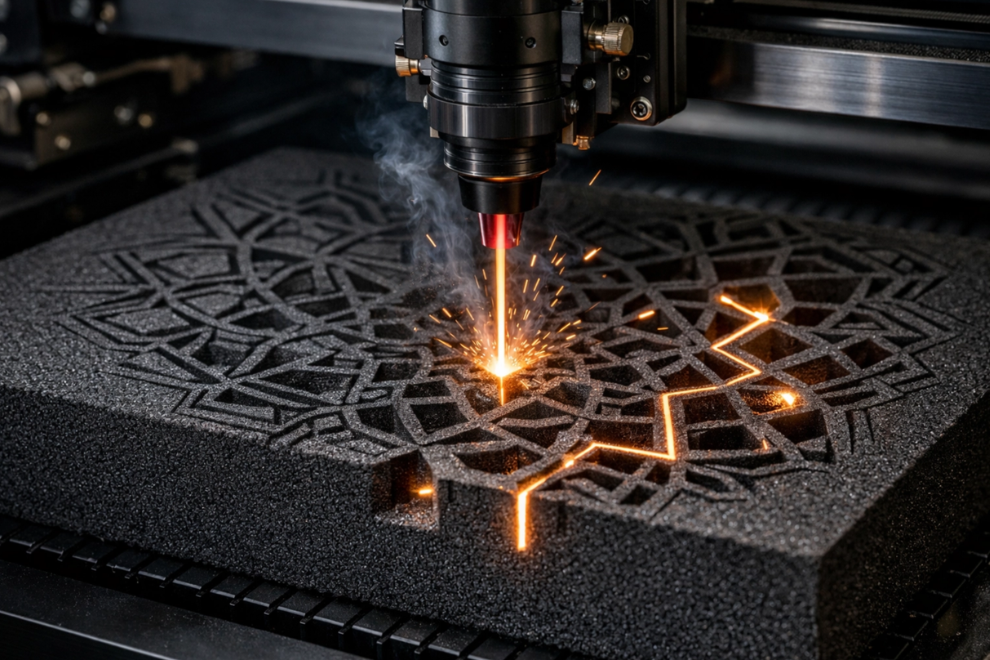
Laser cutting is a contactless process that can deliver clean detail and repeatable results on compatible foams. Edge sealing can be a benefit on certain materials, but suitability depends on the specific polymer and grade.[19]
Hot wire / thermal cutting
Hot wire cutting is commonly used for simpler profiles in certain foam families. It is typically less suited to detailed cavities compared to CNC, waterjet or laser methods.
How to choose the right cutting method
- Geometry - tight internal corners, fine details and complex nesting can favour laser or CNC knife depending on foam type.
- Thickness - thick plank foams can favour waterjet, while thinner sheets may be suitable across most methods.
- Volume - die cutting becomes more attractive as volume increases.
- Tolerances - different cutting processes have different typical tolerance bands; specify the tolerance you need early in procurement discussions.[20]
- Edge finish - some processes leave a “sealed” edge or different texture depending on heat and tooling.
Laser cutting - evidence pack
- Commonly laser-cut foams - manufacturer guidance indicates certain foams such as PE, polyester and PU can be laser cut successfully, with edges sealed by melting.[21]
- Not recommended - EHS guidance warns against laser cutting some foams (e.g., polypropylene foam, polystyrene foam) due to fire or melting hazards.[22]
- Ventilation and fume control - university laser safety guidance stresses the need for effective exhaust systems to remove smoke and hazardous by-products during laser cutting, and recommends allowing smoke to clear before opening enclosures.[23]
Applications
Custom foam inserts are used wherever equipment needs repeatable protection, organisation and presentation. Foam choice and design should match the failure risks in that application (impact, vibration, moisture, chemical exposure, ESD, and compliance requirements).
Defence and military equipment
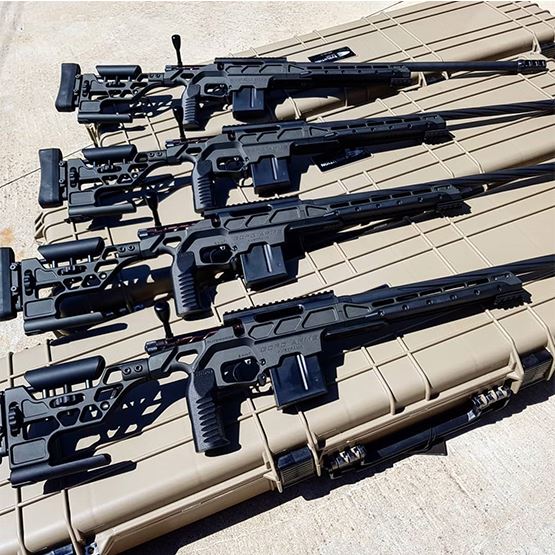
Packaging and case protection for defence equipment often targets shock and vibration protection during transport, including irregular geometries. Foam-in-place is referenced as an approach for complex shapes and logistics environments.[24]
Electronics and ESD-sensitive components
ESD control requirements may apply to foams and packaging systems. Static-dissipative and conductive surface resistance ranges are commonly used to specify packaging materials for ESD-sensitive items.[25]
Medical devices and orthotics
Closed-cell foams are often preferred when hygiene and cleanability matter. Material suitability depends on patient contact profile and compliance requirements.[26]
Photography and optics equipment
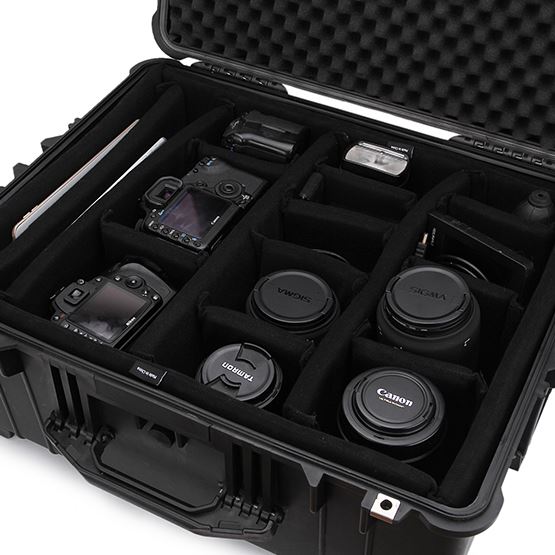
Cases for cameras and optics prioritise impact protection, moisture resistance and fast access organisation. Closed-cell foams are commonly selected due to low water absorption and durability.[27]
Drones and UAV equipment
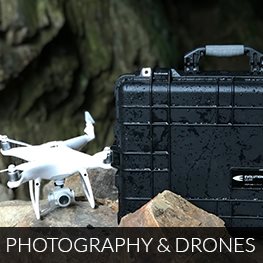
Drone cases often need protection for sensors and cameras, with consideration for moisture and impact protection during transport. Foam design should minimise movement and maintain repeatable placement.[28]
Industrial tooling and field equipment
Tool control inserts often need high durability, resistance to compression set under load, and in some environments resistance to oils and chemicals. Tolerance and retention features matter for repeatable placement.[29]
Automotive parts and components
Automotive-related protection may need flammability compliance (e.g., FMVSS 302) and impact protection. EPP is often selected for its energy absorption and recovery characteristics.[30]
Aerospace and aviation
Aerospace protection can combine shock/vibration control, ESD requirements and flammability considerations depending on the equipment and transport environment.[31]
Benefits of a professional foam cutting service
- Fit and repeatability - consistent cavities and layering improves retention and repeat use.
- Material efficiency - proper nesting and method selection can reduce waste.
- Method matching - selecting the right cutting method for the foam type and thickness improves edge quality and dimensional control.
Maintenance and safety tips
- Keep inserts clean and dry to reduce contamination and moisture-related degradation.
- For electronics, use ESD-appropriate handling and packaging systems as required by your process.
- For laser-cut inserts, ensure materials are screened for compatibility and that appropriate ventilation is used during production.[32]
FAQs
What foam is best for protective case inserts?
It depends on weight, environment and required durability. Closed-cell foams like PE, XLPE, EVA and EPP are commonly used due to moisture resistance and resilience.[33]
What is the difference between PE, EVA, XLPE and PU for inserts?
PE and XLPE are closed-cell and moisture resistant. EVA is often softer and flexible with strong tear resistance. PU is open-cell and highly cushioning but more absorbent unless protected.[34]
Laser vs waterjet - what is better for thick foam?
Waterjet cutting is often used for thicker plank foams because it avoids heat-affected edges. Laser can excel on compatible foams, particularly for fine detail and repeatability, but suitability depends on the polymer and grade.[35]
Do I need ESD foam for electronics?
If the item is ESD-sensitive, packaging systems may need static-dissipative or conductive properties. Surface resistance ranges are used to classify materials for ESD control.[36]
Sources - standards (citation index)
- PFA - Dynamic cushioning in flexible polyurethane foam for packaging
- RAM Gasket - 30 kg/m³ closed-cell polyethylene foam datasheet
- Stockwell Elastomerics - manufacturing tolerance table (die cut / waterjet / flash cut)
- Dow - ETHAFOAM M5 product information
- MIT EHS - Laser cutter guidance
- RAM Gasket - PE foam properties (density, compression, water absorption, temperature)
- Crosslinked polyethylene recycling challenges (Polymers journal)
- Zotefoams - Evazote VA35 datasheet
- JSP - ARPRO EPP physical properties
- Monmouth Rubber - Neoprene/EPDM/SBR sponge (1221) datasheet
- PFA - Packaging foam design (density, IFD/ILD, cushion curves)
- NASA-HDBK-8739.21 - ESD protective packaging surface resistance ranges
- ISO 845 / ASTM D1622 (density) - referenced in foam datasheets
- ISO 844 / ASTM D3575 (compression) - referenced in foam datasheets
- ISO 1856 / ASTM D1056 (compression set) - referenced in foam datasheets
- ISO 62 / ISO 1663 (water absorption) - referenced in foam datasheets
- FMVSS 302 / UL 94 - flammability listings in datasheets (examples)
- Amatech - waterjet cutting foam guide (material examples and notes)
- Trotec - Laser cutting foams (PE, PES, PUR suitability and edge sealing)
- Stockwell Elastomerics - tolerance bands by cutting method
- Trotec - Laser cutting foams (PE, PES, PUR)
- University of Michigan EHS - prohibited laser cutting materials (foam hazards)
- MIT EHS - ventilation/exhaust considerations for laser cutting
- US Army - Packaging the Basics (foam-in-place overview)
- NASA-HDBK-8739.21 - ESD packaging requirements
- American Foam Products - medical foam materials overview (closed-cell vs open-cell)
- RAM Gasket + Zotefoams - low water absorption closed-cell foams (examples)
- RAM Gasket + EVA datasheet - moisture/shock considerations (examples)
- Monmouth datasheet - neoprene blend properties (compression set, temperature)
- JSP ARPRO - EPP impact and recovery characteristics (property table)
- NASA ESD + EPP/PE flammability examples in datasheets
- MIT EHS - laser cutting hazards and exhaust requirements
- RAM Gasket + Zotefoams + JSP - closed-cell foam property examples
- PFA + RAM + EVA - cushioning vs moisture trade-offs (examples)
- Amatech + Trotec - waterjet vs laser considerations (examples)
- NASA-HDBK-8739.21 - surface resistance ranges for ESD packaging