
 1300 11 00 96
How Professional Photographers Travel Safely with Camera Gear
Author: Evolution Gear Date Posted: 13 May 2026
TL;DR
- Professional photographers usually use hard cases for transport and lighter carry setups only when fast access matters on location.
- The safest camera travel setup reduces gear movement, improves organisation, and matches the size and complexity of the job.
- Foam works best for fixed camera kits, while padded dividers are better for flexible loadouts.
- Evolution Gear’s camera cases, camera and drone cases, trolley cases, padded dividers, and custom foam solutions all fit different photography travel needs.
How do professional photographers travel safely with camera gear?
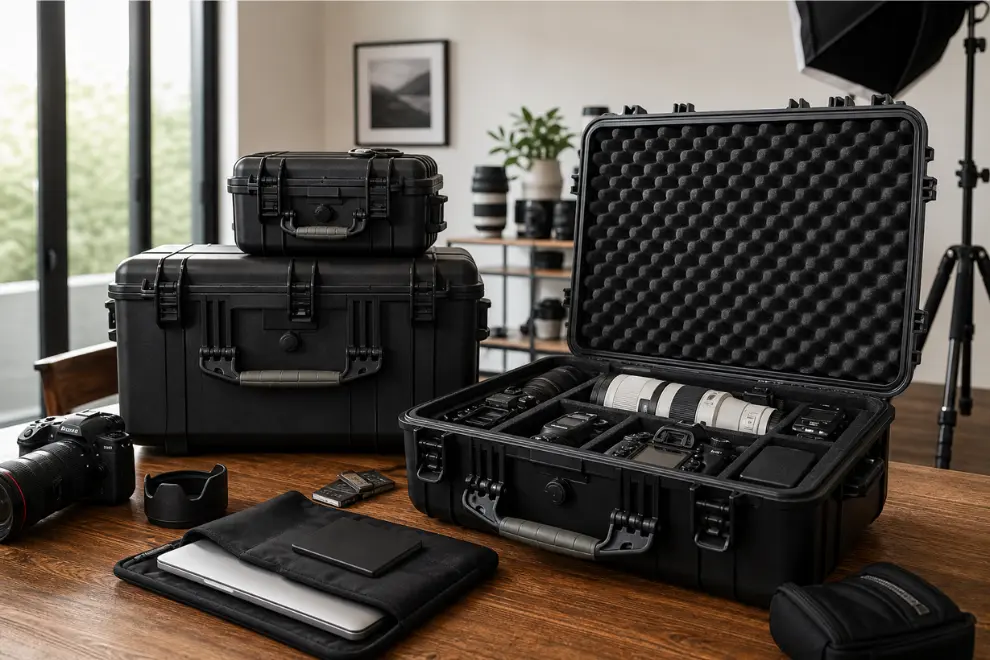
Professional photographers travel safely with camera gear by using the right protection for each stage of the job. For most, that means a hard case for transport, a structured internal layout that stops gear moving, and a lighter-access setup only when speed on location matters more than maximum protection.
The main risk is not just damage. It is losing time, flexibility and reliability when a body, lens, battery or accessory arrives loose, crushed, wet, dusty or hard to access. Good case selection reduces those problems before the shoot starts.
This guide explains how professional photographers protect camera gear in transit, when hard cases make more sense than softer carry options, and which Evolution Gear solutions are most relevant for camera travel.
1. What Professional Photographers Actually Need from a Travel Case
Professional camera transport is not the same as casual luggage use. A photography case has to do more than carry equipment from one place to another. It needs to protect sensitive gear, keep the layout organised, and make setup faster when the job begins.
For most photographers, the best case setup should do four things well:
- protect camera bodies, lenses and accessories from knocks and pressure
- keep gear from shifting during flights, drives and repeated loading
- make the kit easier to organise and faster to unpack
- match the size and complexity of the job without overpacking
2. Why Hard Cases Matter for Professional Camera Travel
Hard cases are usually the stronger option when the gear is travelling through airports, vehicles, freight handling, multi-location assignments or rougher outdoor conditions. They give the kit more structure and reduce the risk that fragile items are compressed or knocked against each other in transit.
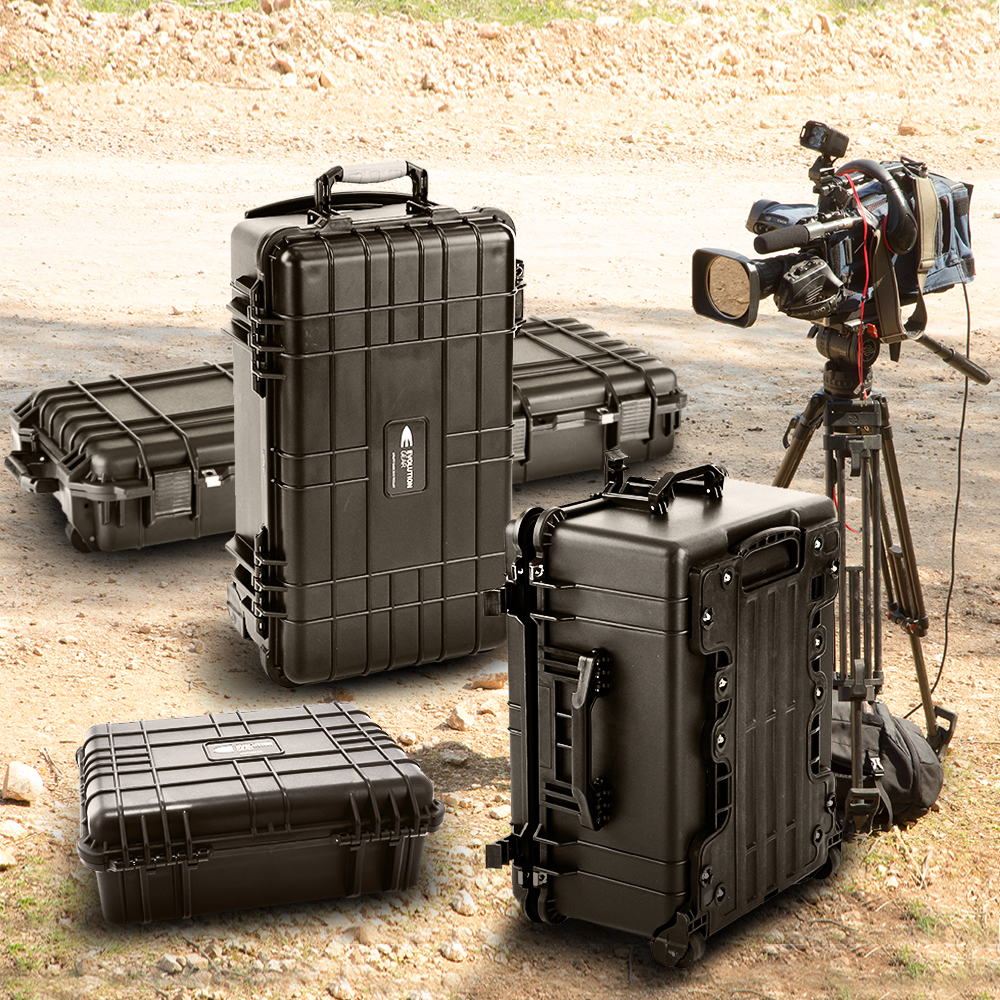
If the main goal is stronger transport protection for camera equipment, the most relevant starting point is camera cases. If the setup includes cameras alongside drones or mixed field gear, the broader camera and drone cases range is often the better fit.
Hard cases are usually the right choice when:
- the kit includes multiple bodies, lenses and accessories
- gear is travelling by plane or over long road distances
- equipment is high value and difficult to replace quickly
- the layout needs to stay consistent across repeated shoots
- the job involves more handling between locations
3. When a Padded Carry Setup Still Makes Sense
A lighter padded bag can still be useful, but usually as part of a broader system rather than the only layer of protection. Many professionals transport the full kit in a hard case, then move into a more mobile bag once they are on location and actively shooting.
This works best when the job needs faster movement through urban environments, events or tighter shooting schedules, but the gear still needs stronger protection during the travel stage.
4. Foam vs Padded Dividers for Camera Gear
This is one of the most practical decisions in any camera case setup.
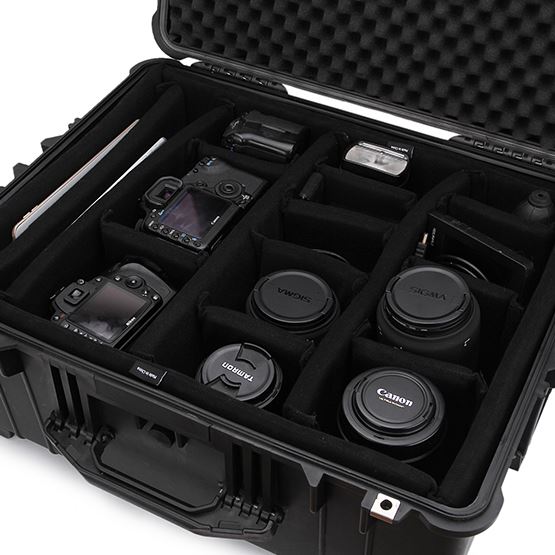
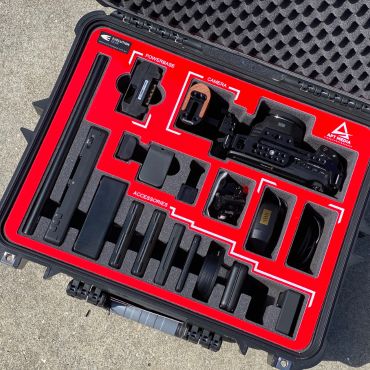
If the same gear travels together regularly, foam usually gives better control. It creates a more exact fit and can help stop camera bodies, lenses and accessories from moving inside the case. If that is the priority, look at custom foam cutting or the wider photography foam pathway.
If the loadout changes from shoot to shoot, padded dividers are often more practical. They make it easier to reconfigure the case for different cameras, lenses or support accessories without rebuilding the whole layout.
A simple rule works well here:
- choose foam for fixed kits that travel often
- choose dividers for changing kits that need flexibility
If readers want a direct supporting resource, Evolution Gear already has a relevant FAQ on whether camera gear should be stored in foam or padded dividers.
5. Hard Cases vs Padded Carry Setups
Photographers often need both, but they do different jobs. A hard case is usually the better transport solution, while a padded carry setup is usually better for mobility during the shoot.
| Feature | Hard Case | Padded Carry Setup |
|---|---|---|
| Best use | Transport, flights, long drives, rough handling | On-location carry, faster access, lighter movement |
| Protection level | Higher structure and protection | Moderate protection with more flexibility |
| Internal control | Better for foam or fixed layouts | Better for quick-access flexible storage |
| Best for fragile gear | Yes | Only when transport risk is lower |
| Best for active shooting | Less practical once shooting starts | More practical once on site |
6. How Professionals Pack Camera Gear for Safer Travel
Good packing is usually less about adding more padding and more about reducing movement, pressure and clutter.
- pack only the gear needed for the job
- keep bodies, lenses and fragile accessories clearly separated
- avoid empty spaces that let gear shift in transit
- store small items so they are easy to find without unpacking the entire case
- check the case layout before departure, not after arrival
Overpacking is one of the most common problems. The more loose accessories, duplicate items and last-minute additions a case carries, the harder it becomes to keep the kit protected and organised.
7. How Travel Conditions Change the Right Case Setup
Flights and airport handling
Air travel increases the value of a more structured layout. The gear may be moved more often, handled by others, and exposed to tighter packing conditions than on a local job. For this scenario, Evolution Gear’s FAQ on packing a hard case for camera gear on flights is a useful supporting page.
Road travel and regional assignments
Long drives and repeated loading in and out of vehicles can create constant low-level movement that gradually becomes a gear problem. This is where a hard case with a more secure internal layout often makes a bigger difference than photographers expect.
Remote outdoor shoots
Outdoor work adds more dust, weather exposure, uneven ground and handling pressure. In those conditions, transport protection matters more than quick-access convenience during the travel stage.
Urban and event work
In cities and event spaces, mobility may become more important once the photographer is on site. That is why many professionals separate travel protection from active-use carry rather than forcing one bag to do both jobs equally well.
8. Best Evolution Gear Paths for Different Photography Setups
Best for camera-only kits
Start with camera cases if the main need is protecting bodies, lenses and core photography accessories.
Best for mixed photo and drone kits
Use camera and drone cases if the job regularly combines stills, video, drone gear or other mixed equipment.
Best for larger or heavier transport loads
Look at trolley cases when the equipment load is heavier, bulkier or moved through airports and larger job sites more often.
Best for fixed professional layouts
Use custom foam cutting when the kit is high value, repeated often, and needs a tighter internal fit.
Best for flexible loadouts
Use padded dividers when the camera setup changes regularly and the case needs to adapt with it.
9. Common Mistakes Photographers Make with Travel Protection
- using a generic bag for every type of trip
- choosing convenience first when the job needs stronger transport protection
- letting lenses, bodies or accessories shift inside the case
- using a fixed layout for a kit that changes constantly
- packing too much gear without a clear layout plan
- treating storage and transport as the same problem when they need different solutions
10. Conclusion
Professional photographers travel safely with camera gear by choosing protection that matches the actual job, not just the size of the kit. For many, the strongest setup is a hard case for transport, a secure internal layout that keeps gear stable, and a flexible on-location carry option only where it adds value.
If you need stronger protection for camera bodies, lenses and accessories, start with camera cases. If your setup includes drones or mixed field gear, browse camera and drone cases. If internal fit is the biggest issue, look at custom foam solutions or padded dividers depending on how fixed the kit is.
FAQs
How do professional photographers travel safely with camera gear?
Most do it by using a structured transport setup, keeping fragile gear properly separated, and choosing a case layout that matches the type of trip and the value of the equipment.
Are hard cases better than padded camera bags for professional travel?
Usually, yes for transport. Hard cases are generally the better option when stronger protection, more structure and less gear movement matter. Padded bags are more useful when mobility and quick access matter on location.
Should camera gear be stored in foam or padded dividers?
Foam usually works better for fixed kits that travel together often. Padded dividers are usually better when the equipment setup changes regularly and needs a more flexible layout.
What is the safest way to pack camera gear for flights?
The safest approach is to pack camera gear in a structured layout that limits movement, separates delicate equipment clearly, and makes key items easier to manage during travel.
When is custom foam worth it for camera equipment?
Custom foam is worth it when the kit is high value, travels often, or needs a more exact internal fit for bodies, lenses and accessories.