
 1300 11 00 96
Complete Guide to Equipment Protection During Storage and Transport
Author: Evolution Gear Date Posted: 9 June 2026
TL;DR
- Good equipment protection starts with matching the case, foam, and layout to the gear you need to store or move.
- Most damage happens from impact, vibration, moisture, dust, poor packing, or equipment moving inside the case.
- Hard cases, foam inserts, padded dividers, and trolley cases all solve different protection problems.
- The best setup keeps equipment secure, organised, easy to access, and protected during both storage and transport.
What Equipment Protection Really Means
Equipment protection is not just about putting valuable gear into a box. It is about choosing the right case, internal layout, and handling process so your equipment stays secure during storage, transport, and daily use.
Cameras, drones, electronics, testing tools, surveying equipment, industrial tools, and other sensitive gear can be damaged by impact, dust, moisture, vibration, and poor packing. Even small damage can lead to downtime, repair costs, lost work, or equipment that is no longer ready when you need it.
This guide explains how to protect equipment during storage and transport, what causes damage, when hard cases make sense, and how foam inserts or padded dividers can improve the way your gear is stored. If you are comparing protective case options, Evolution Gear offers a range of utility hard cases, trolley cases, and custom foam cutting options for different equipment setups.
Why Equipment Protection Matters
Many people think about equipment protection only after something breaks. A better approach is to look at the risks before the gear is moved, stored, or packed for a job.
Equipment can be exposed to rough handling, vehicle movement, water, dust, pressure from other items, and poor storage conditions. These risks are higher when gear is moved between job sites, carried in vehicles, stored in sheds or workshops, or packed with accessories that can shift around.
Good protection helps with more than damage prevention. It can also make equipment easier to find, faster to pack, and simpler to manage across multiple jobs or team members.
Common risks include:
- accidental drops during loading and unloading
- equipment shifting inside a vehicle or case
- dust entering sensitive parts or accessories
- moisture exposure during outdoor work or storage
- vibration during long drives or rough transport
- poor organisation that makes gear harder to check and use
Common Causes of Equipment Damage
A lot of equipment damage does not happen while the item is being used. It happens while the item is being packed, moved, stored, or unpacked.
Poor internal fit
If equipment has room to move inside a case, it can hit the case wall or other accessories during transport. This is one of the main reasons foam inserts and padded dividers matter.
Impact during transport
Cases can be knocked, stacked, dropped, or pushed into other gear during travel. A rigid outer case helps protect against external pressure, while the internal layout helps protect the item itself.
Dust and moisture exposure
Dust and moisture can create problems for cameras, drones, tools, electronics, and instruments. A sealed hard case can help reduce exposure when gear is stored or transported in demanding conditions.
Overpacking
Packing too much into one case can create pressure points and make gear harder to organise. It can also make it difficult to see when something is missing or packed incorrectly.
Using the wrong case type
A light storage box may be fine for low-risk items kept indoors. It is not always the right option for expensive or sensitive gear that is moved often, exposed to weather, or handled by different people.
Understanding Different Equipment Protection Needs
Different equipment needs different protection. A drone setup has different risks from a testing instrument, and a camera kit needs a different layout from industrial tools.
The table below gives a simple way to match common equipment types with likely risks and suitable protection options.
| Equipment type | Main risk | Useful protection option |
|---|---|---|
| Cameras and lenses | Impact, moisture, scratches, and lens movement | Camera cases with foam or padded dividers |
| Drones and accessories | Propeller, battery, controller, and sensor damage | Drone cases with fitted compartments |
| Survey and testing equipment | Vibration, movement, and impact | Hard cases with fitted foam layouts |
| Industrial tools | Heavy impacts and poor organisation | Durable utility hard cases |
| Electronics and accessories | Shock, dust, moisture, and cable clutter | Hard cases with foam inserts or dividers |
| Mixed field kits | Changing layouts and repeated transport | Trolley cases, padded dividers, or custom foam |
This does not mean every item needs the heaviest possible case. It means the case should match the value, fragility, transport method, and environment.
Choosing the Right Storage Solution
Storage matters even when equipment is not being moved. Gear can still be affected by dust, moisture, poor stacking, heat, or being stored loose with other items.
A good storage setup should make the equipment easy to find, easy to inspect, and hard to damage. It should also stop accessories from moving around or being packed in the wrong place.
What to look for in storage protection
- a case that fits the equipment without excess empty space
- foam inserts or dividers that stop movement
- clear separation between fragile items and heavier accessories
- a layout that makes missing items easy to spot
- enough protection for the storage environment
For equipment that changes often, padded dividers can be useful because the layout can be adjusted. For fixed kits that travel together often, foam inserts usually provide a tighter fit.
How environmental conditions affect stored equipment
Dust, moisture, and heat can all affect stored equipment over time. The exact risk depends on the gear and where it is stored.
Simple storage habits can help:
- store gear in a clean, dry area where possible
- keep equipment away from direct sunlight when not in use
- inspect cases, seals, and foam regularly
- avoid leaving sensitive equipment loose on shelves or benches
- keep accessories organised so they do not scratch or press against main items
Protecting Equipment During Transport
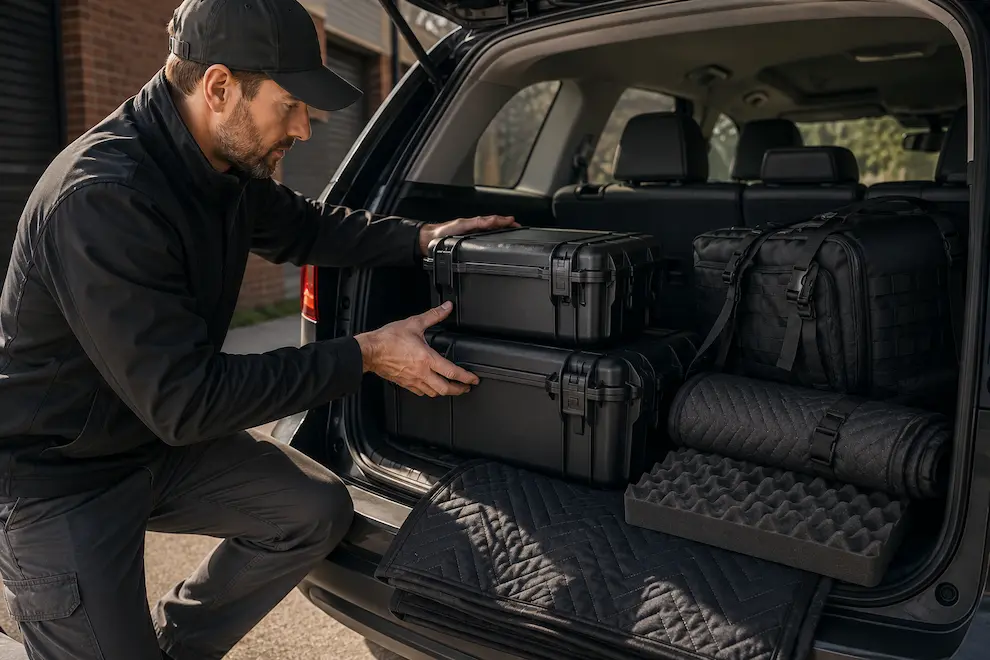
Transport is one of the highest-risk stages for valuable equipment. Gear can move inside a vehicle, get bumped during loading, or be stacked under other items.
The aim is simple: reduce movement, reduce impact, and make the equipment easier to handle. The case, foam, dividers, and packing process all work together.
Managing impact and vibration
Vibration is a common transport issue. It can come from rough roads, vehicle trays, repeated loading, or equipment being stored in a case that is too loose.
A better transport setup should:
- hold the equipment firmly in place
- separate fragile items from heavy accessories
- reduce direct contact between equipment and case walls
- make the case easier to lift, roll, or move safely
- keep the same packing layout each time
When trolley cases make sense
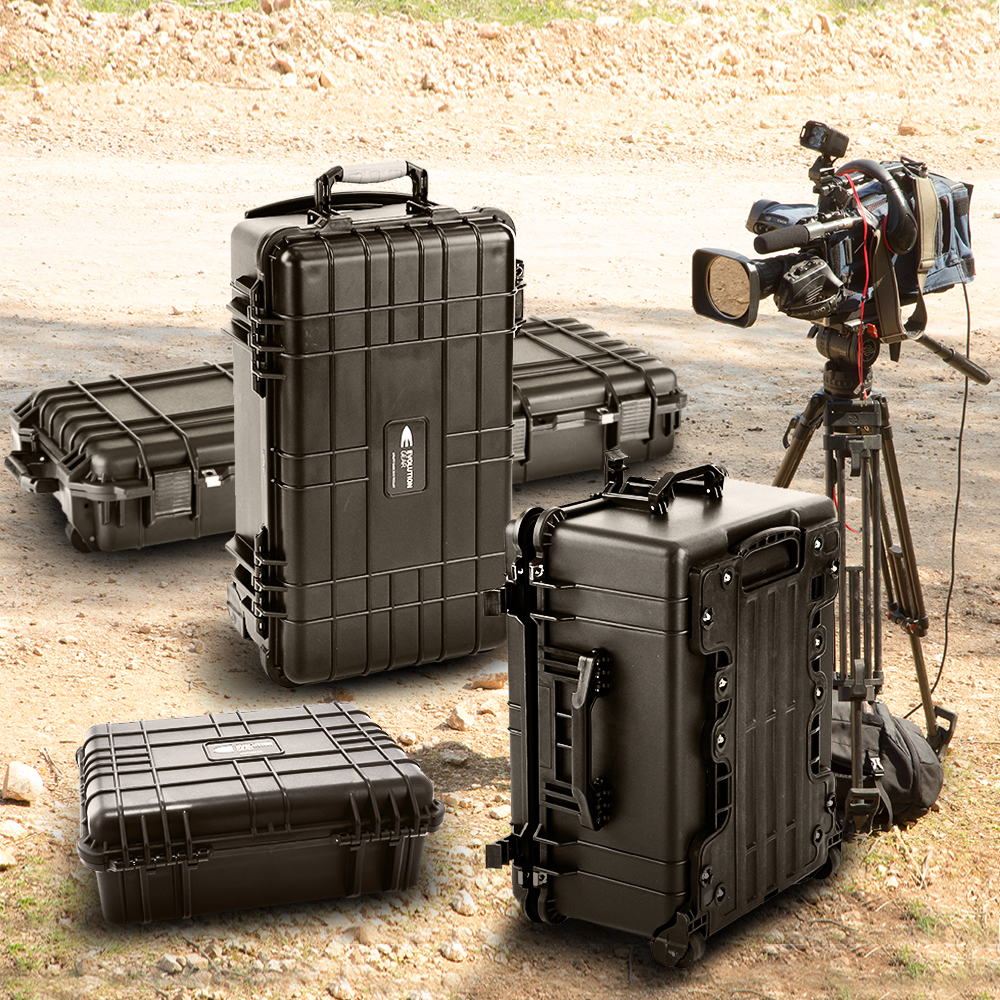
If a case is heavy, bulky, or moved often, a trolley case can make transport easier. This is especially useful for larger camera kits, drone setups, field equipment, lighting accessories, or tool kits that need to move through car parks, workshops, job sites, or airports.
Evolution Gear trolley cases are a good internal link target for readers who need mobility as well as protection.
The Benefits of Hard Cases
Hard cases are one of the most practical options for equipment protection because they combine outer shell strength with an internal layout that can be matched to the gear.
A hard case is usually most useful when equipment is valuable, fragile, used outdoors, moved often, or stored with multiple accessories.
Hard cases can help protect against:
- external impact during transport
- dust and debris
- moisture exposure in suitable conditions
- crushing or pressure from other items
- poor organisation during packing and unpacking
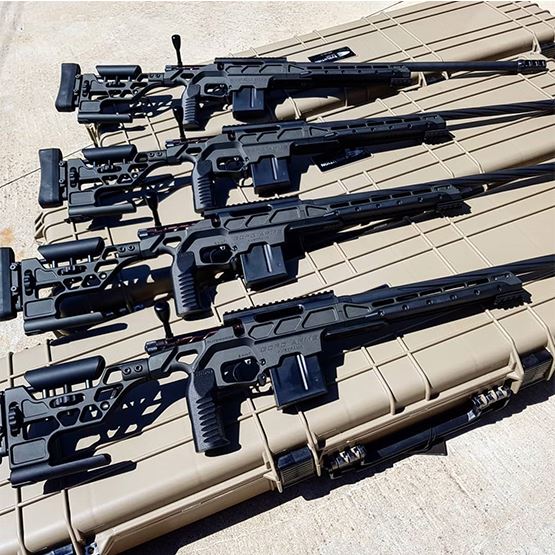
For buyers comparing broader case options, Evolution Gear’s utility hard cases are a useful place to start. For those comparing case brands, the Max Cases range may also be relevant depending on the equipment and use case.
Hard cases vs basic storage containers
| Feature | Hard case | Basic storage container |
|---|---|---|
| Outer protection | Rigid shell built for equipment protection | Usually made for general storage |
| Internal fit | Can use foam inserts or dividers | Often loose or unstructured |
| Transport use | Better suited to repeated movement | Best for low-risk storage |
| Organisation | Can give each item a set position | Items may shift or mix together |
| Best for | Valuable, fragile, or sensitive equipment | General items with low damage risk |
Why Foam Protection Is Essential
A strong outer case is only one part of the protection system. If the equipment moves inside the case, it can still be damaged.
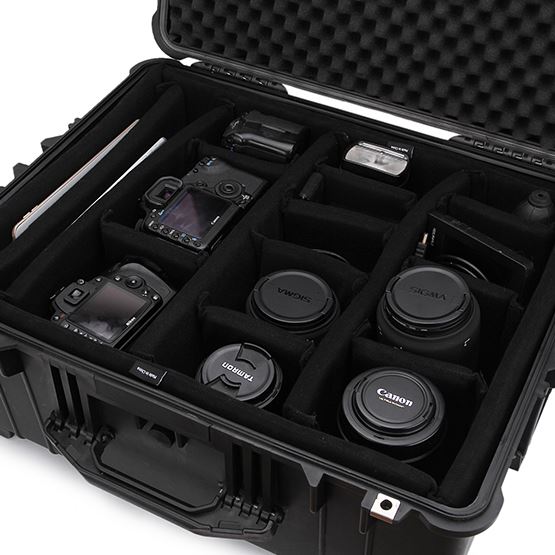
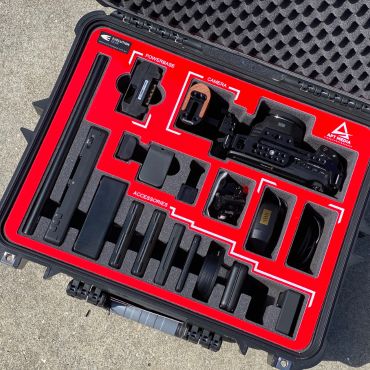
Foam inserts help reduce internal movement by creating a more secure fit around the equipment. This can be especially useful for camera bodies, lenses, drone components, electronics, tools, testing gear, and accessories that need a set position.
Custom foam for fixed equipment kits
If the same equipment travels together often, custom foam cutting can create a more exact layout. This helps keep each item in place and makes it easier to see if anything is missing before leaving a job site.
Easy pick foam for flexible layouts
For users who want to set up their own layout, easy pick diced foam can be a practical option. It gives more flexibility than a fully custom design while still helping reduce movement inside the case.
Padded dividers for changing gear
If the equipment changes from job to job, padded dividers may be more useful than fixed foam. They allow the case layout to be adjusted for different bodies, lenses, tools, accessories, or mixed kits.
Building a Strong Asset Protection Strategy
Good equipment protection is not only about buying a case. It also depends on how the equipment is packed, labelled, moved, checked, and stored.
For businesses, teams, and regular equipment users, a simple protection process can reduce damage and make gear easier to manage.
Useful habits include:
- checking equipment before and after transport
- keeping each item in a set position inside the case
- using labels where multiple cases are in use
- separating fragile equipment from heavy accessories
- checking foam, dividers, seals, wheels, and handles for wear
- reviewing the case layout when equipment changes
These steps are simple, but they help prevent many avoidable problems. They also make it easier for teams to pack gear consistently.
Selecting the Right Case for Your Equipment
The right case depends on the equipment, how often it moves, who handles it, and where it is stored or transported.
Before choosing a case, ask:
- How fragile is the equipment?
- How often will it be transported?
- Will it be exposed to dust, moisture, or rough handling?
- Does the gear need a fixed layout or a flexible layout?
- Will the case be carried, rolled, stacked, or stored in a vehicle?
- Are there accessories, cables, batteries, or small parts that need their own space?
For camera or drone equipment, start with the camera and drone cases range. For larger or heavier setups, look at trolley cases. If the main problem is internal fit, custom foam or padded dividers may be the better next step.
If you are not sure what case or foam layout suits your equipment, you can contact Evolution Gear for help choosing a suitable protection option.
Conclusion
Equipment protection during storage and transport comes down to three things: the right outer case, the right internal layout, and the right handling habits.
Hard cases help protect against external impact, dust, moisture exposure, and transport pressure. Foam inserts and padded dividers help control movement inside the case. A good packing process helps keep equipment organised and ready to use.
For businesses, creators, technicians, drone operators, photographers, and field teams, the right protection setup can reduce damage, improve organisation, and make equipment easier to manage over time.
Explore Evolution Gear’s range of protective utility hard cases, trolley cases, and custom foam solutions to build a storage and transport setup that suits your gear.
FAQs
What is the best way to protect equipment during transport?
The best way is to use a durable case with an internal layout that stops the equipment from moving. Hard cases, foam inserts, and padded dividers can all help depending on the type of equipment and how it is transported.
Are hard cases better than standard storage containers?
Hard cases are usually better for valuable, fragile, or frequently moved equipment because they provide a rigid outer shell and can be fitted with foam or dividers. Basic storage containers are better suited to low-risk general storage.
How do foam inserts protect equipment?
Foam inserts help hold equipment in place inside the case. This reduces movement, separates accessories, and helps protect gear from impact and vibration during storage or transport.
When should I choose custom foam instead of padded dividers?
Choose custom foam when the same equipment travels together often and needs a precise fit. Choose padded dividers when your equipment setup changes regularly and you need a more flexible layout.
Are waterproof hard cases necessary for equipment storage?
Waterproof hard cases can be useful when equipment may be exposed to rain, moisture, dust, or outdoor conditions. The right choice depends on the equipment, storage location, and transport environment.
How often should equipment cases and foam be inspected?
Cases and foam should be checked regularly, especially if the equipment is moved often. Look for worn foam, damaged handles, loose dividers, broken latches, wheel wear, or seals that no longer sit properly.