
 1300 11 00 96
How Mining Operations Protect Sensitive Monitoring Equipment
Author: Evolution Gear Date Posted: 22 June 2026
TL;DR
- Mining monitoring equipment needs protection from dust, moisture, vibration, impact, and repeated handling.
- A strong protection setup usually combines a hard outer case, a secure internal foam layout, and clear transport habits.
- Custom foam and pre-cut foam can help keep detectors, sensors, instruments, and accessories in fixed positions.
- The right case system should match the equipment, transport method, storage conditions, and field environment.
How Mining Teams Protect Sensitive Monitoring Equipment
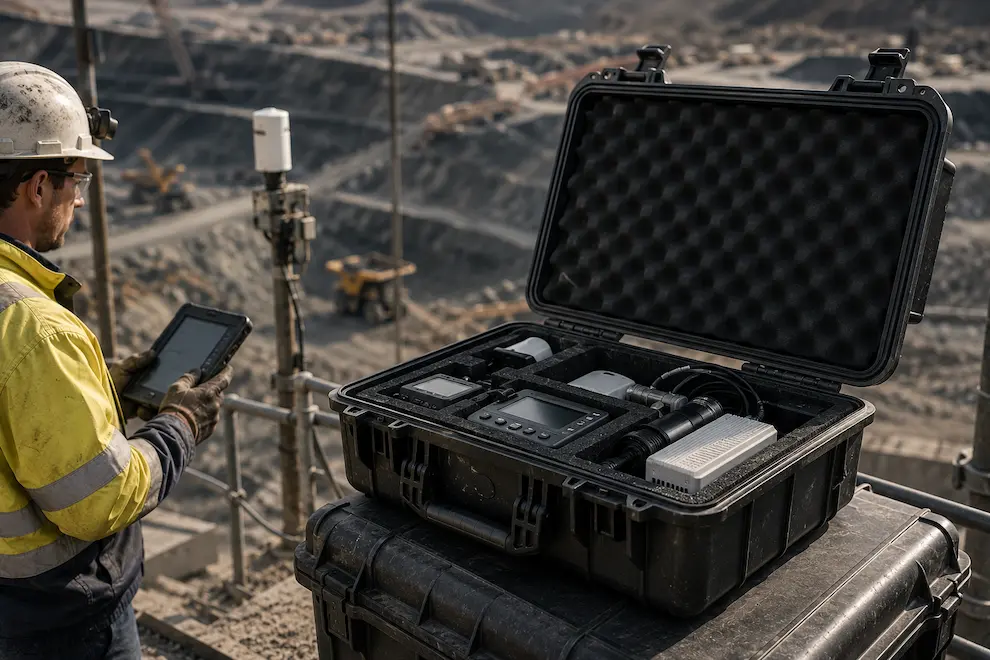
Mining operations often rely on sensitive monitoring equipment, detectors, testing instruments, communication gear, sensors, and field tools. These items may need to move between vehicles, storage areas, workshops, mine sites, and remote locations where dust, moisture, vibration, and handling risk are common.
Mining equipment protection is about reducing avoidable damage during storage and transport. It is not only about choosing a strong case. The internal layout, foam support, packing process, labelling, and handling habits all matter.
This guide explains how mining teams can protect sensitive monitoring equipment with hard cases, foam inserts, better packing systems, and practical transport routines. For equipment-specific storage, Evolution Gear’s mining equipment foam inserts, custom foam cutting, and utility hard cases are relevant starting points.
Why Mining Equipment Protection Matters
Mining environments can be demanding on equipment. Gear may be exposed to dust, vehicle movement, rough handling, moisture, temperature changes, and repeated packing and unpacking.
Sensitive monitoring equipment may include items such as detection tools, meters, handheld instruments, cables, probes, chargers, batteries, and accessories. If these items are packed loose or stored poorly, they can shift inside vehicles or cases and become harder to manage on site.
Good protection helps teams:
- reduce movement inside cases during transport
- keep equipment and accessories organised
- make missing items easier to spot before leaving site
- separate fragile items from heavier tools
- reduce exposure to dust and moisture where suitable cases are used
- support a more consistent packing and handling process
The right system should be practical. It needs to suit the equipment, the site conditions, and the way the team actually moves gear.
Challenges in Industrial Equipment Transport
Transport is one of the main risk points for mining equipment. Gear may be loaded into utes, trucks, service vehicles, workshops, storage rooms, and site containers. During that process, cases can be stacked, shifted, bumped, or exposed to dust and weather.
Even short transport runs can create problems if equipment is loose inside a case. Long drives over rough roads can add vibration and repeated movement, especially when tools and accessories are packed together without separation.
Common transport risks include:
- continuous vibration on rough roads or site tracks
- impact during loading and unloading
- equipment shifting inside vehicles or cases
- dust entering poorly sealed storage
- water or moisture exposure during outdoor work
- heavy items pressing against sensitive instruments
A good transport setup should control these risks as much as practical by combining outer case strength with a secure internal layout.
Protective Equipment Cases in Mining Operations
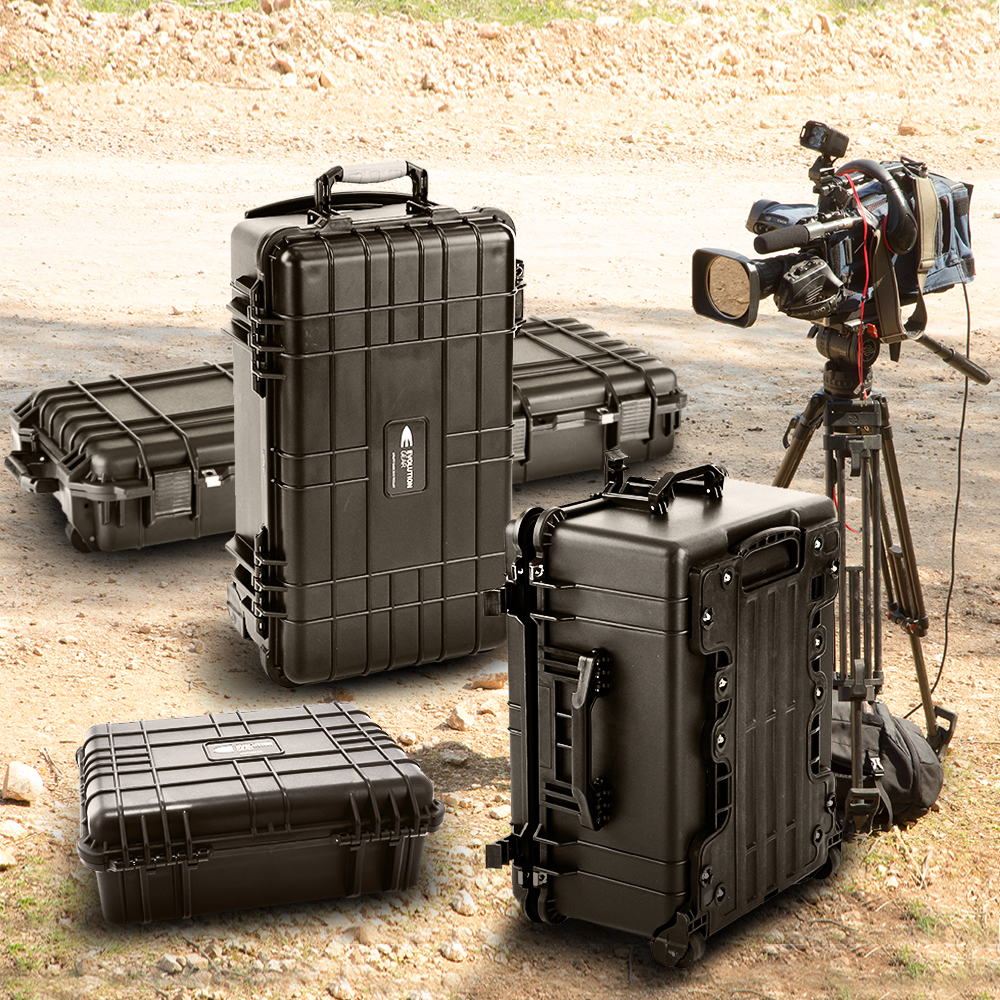
Protective cases create the first layer of defence for mining equipment. A hard outer shell helps protect against knocks, stacking pressure, rough handling, and general transport stress.
For mining use, a case should be chosen around the equipment and the environment. Some teams need compact utility cases for handheld instruments. Others need larger cases or trolley cases for heavier kits, multiple devices, or equipment that is moved often.
Useful case features can include:
- a rigid outer shell
- secure latches
- space for foam inserts or dividers
- handles or wheels matched to the weight of the kit
- sealing features where dust or moisture is a concern
- enough internal space to avoid overpacking
For general industrial and field equipment, Evolution Gear’s utility hard cases can suit a range of storage and transport needs. Larger or heavier setups may be better suited to trolley hard cases.
Waterproof and Dustproof Case Considerations
Dust and moisture are common concerns in mining environments. Fine dust can collect around accessories, ports, cables, and storage areas. Moisture can also be an issue when gear is used outdoors, stored in vehicles, or moved between different environments.
Waterproof and dustproof cases can help reduce exposure when they are selected and used correctly. The right level of protection depends on the equipment, how often it is moved, and the site conditions.
When sealed cases are worth considering
- equipment is used outdoors or in dusty work areas
- gear is transported in open vehicles or exposed storage areas
- small parts need to stay clean and organised
- instruments are stored for long periods between jobs
- the team needs a more controlled storage environment inside the case
Sealing alone is not enough. Equipment still needs to be packed correctly, and any wet or dirty gear should be cleaned and dried before long-term storage where possible.
Foam Protection for Mining Instruments
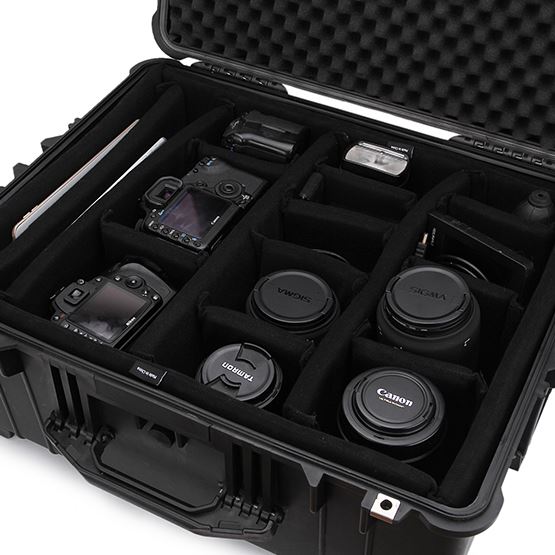
The outer case protects from the outside. Foam protects the equipment inside the case. Without a good internal layout, tools and accessories can still move, collide, or press against each other during transport.
For mining equipment, foam can be used to create set positions for detectors, handheld instruments, cables, chargers, probes, batteries, and accessories. This makes the case easier to check and reduces loose movement.
| Foam option | Best for | Main benefit |
|---|---|---|
| Standard foam | Light gear and simple storage | Adds basic cushioning |
| Dense foam | Heavier equipment and accessories | Provides firmer support |
| Custom cut foam | Fixed equipment layouts | Creates a precise fit for specific gear |
| Layered foam | Kits with multiple parts | Separates items by level or function |
| Easy pick foam | Users who want to shape their own layout | Allows flexible DIY setup |
For mining-specific layouts, the mining pre-cut foam category is a relevant internal link target. For unique equipment shapes, custom foam cutting may be more suitable.
Mining Instrument Protection in Field Conditions
Field equipment needs to be packed for real site conditions, not only for storage-room use. A case may be carried over uneven ground, loaded into a vehicle, opened outdoors, or moved between teams.
That means the storage system should be easy to use under pressure. If a layout is too confusing, too tight, or too hard to repack, people are less likely to use it consistently.
A field-ready layout should:
- make equipment easy to remove and return
- keep small accessories visible
- separate fragile instruments from heavier tools
- avoid overpacking
- allow quick checks before leaving site
- support consistent packing by different team members
For example, a detector kit may need a fixed space for the main unit, battery, charger, coils, cables, and documents. A fitted foam layout can make that easier to manage.
Heavy-Duty Mining Case Foam Solutions
Some mining equipment is heavier, more awkwardly shaped, or more sensitive to movement than general tools. In these cases, the foam needs to do more than fill space. It needs to support the item properly and stop it moving inside the case.
A fitted foam insert can be designed around the shape of the equipment and its accessories. This can reduce empty space, improve organisation, and make repeated packing easier.
Heavy-duty foam layouts can help with:
- supporting heavier equipment inside the case
- separating sharp or hard accessories from sensitive items
- reducing movement during vehicle transport
- making each item easier to identify
- building a repeatable packing system for teams
For fixed mining kits, examples such as a mine detector case insert show how a case and foam layout can be matched to specific equipment.
Equipment Transport Tips for Mining Teams
Even the best case can perform poorly if it is packed or handled badly. Mining teams should treat storage and transport as part of the equipment process, not an afterthought.
Practical transport tips
- close and latch cases fully before moving them
- keep sensitive equipment away from heavy loose tools
- avoid stacking heavy items on cases that are not designed for that load
- use foam or dividers to reduce internal movement
- check wheels, handles, latches, and foam after repeated transport
- label cases clearly where several kits are used
- keep a simple checklist for high-value equipment kits
These steps are basic, but they make the protection system easier for teams to follow every day.
Case Options for Mining Equipment
Mining teams may need different case types depending on the equipment and workflow. A handheld detector kit does not need the same setup as a larger monitoring system or a multi-part field kit.
Common options include:
- Utility hard cases for instruments, detectors, cables, and smaller equipment kits.
- Trolley hard cases for larger or heavier kits that need easier movement.
- Custom foam cases for fixed equipment layouts and repeat packing.
- Pre-cut foam options for mining equipment where a suitable layout already exists.
- MAX cases where the buyer is comparing compatible hard case options in the Evolution Gear range.
For buyers comparing hard case options, Evolution Gear’s MAX cases category may be useful. For mining-specific foam options, start with mining foam inserts.
How Mining Teams Improve Protection Systems
A strong protection system usually has layers. The outer case protects against external handling and site conditions. The foam or divider layout protects the equipment inside. The team process keeps the system consistent.
Mining teams can improve their setup by reviewing how equipment is packed, moved, stored, and checked after use.
Useful improvement steps
- identify which equipment is most exposed during transport
- replace loose packing with fitted foam or dividers
- separate high-value instruments from heavy tools
- use labels or checklists for multi-part kits
- inspect cases and foam after repeated field use
- update the layout when equipment changes
The best system is one the team can follow without slowing down the work.
Benefits of Strong Equipment Protection
Strong equipment protection can support more reliable storage and transport. It can also make equipment easier to manage across teams, vehicles, and sites.
Key benefits include:
- less internal movement during transport
- better organisation of equipment and accessories
- faster checks before and after field work
- clearer packing systems for team members
- reduced risk of dust and moisture exposure when suitable cases are used
- better separation between sensitive instruments and heavier equipment
These benefits are practical. They help teams reduce avoidable handling problems and make equipment easier to keep ready for work.
Conclusion
Mining operations often move sensitive monitoring equipment through harsh and unpredictable environments. Dust, moisture, vibration, rough handling, and repeated transport can all create storage and protection challenges.
A better protection setup combines the right hard case, the right internal foam layout, and simple handling habits that the team can follow every day. For fixed equipment kits, custom foam can create a precise layout. For mining-specific kits, pre-cut foam may already provide a suitable starting point. For larger or heavier equipment, trolley cases can make movement easier.
Explore Evolution Gear’s mining equipment foam inserts, custom foam cutting, and utility hard cases to build a storage and transport setup that suits your equipment.
FAQs
Why is mining equipment protection important?
Mining equipment protection is important because sensitive tools may be exposed to dust, moisture, vibration, impact, and repeated handling. A good case and foam layout can help reduce movement and improve organisation during storage and transport.
How does transport affect mining monitoring equipment?
Transport can expose monitoring equipment to vibration, bumps, stacking pressure, and movement inside vehicles. If equipment is packed loose, it may shift or press against other items during travel.
What type of case is best for mining equipment?
The best case depends on the equipment size, weight, transport method, and site conditions. Utility hard cases can suit smaller kits, while trolley hard cases may be better for larger or heavier equipment.
Why is foam protection useful for mining tools?
Foam protection helps hold tools and instruments in set positions inside the case. This reduces internal movement, separates accessories, and makes the kit easier to check before and after transport.
Are waterproof and dustproof cases useful on mining sites?
Waterproof and dustproof cases can be useful where equipment may be exposed to rain, moisture, dust, mud, or outdoor storage conditions. The right case depends on the equipment and the environment.