
 1300 11 00 96
How to Choose the Right Hard Rifle Case: Complete Guide 2026
Author: Evolution Gear Date Posted: 2 September 2026
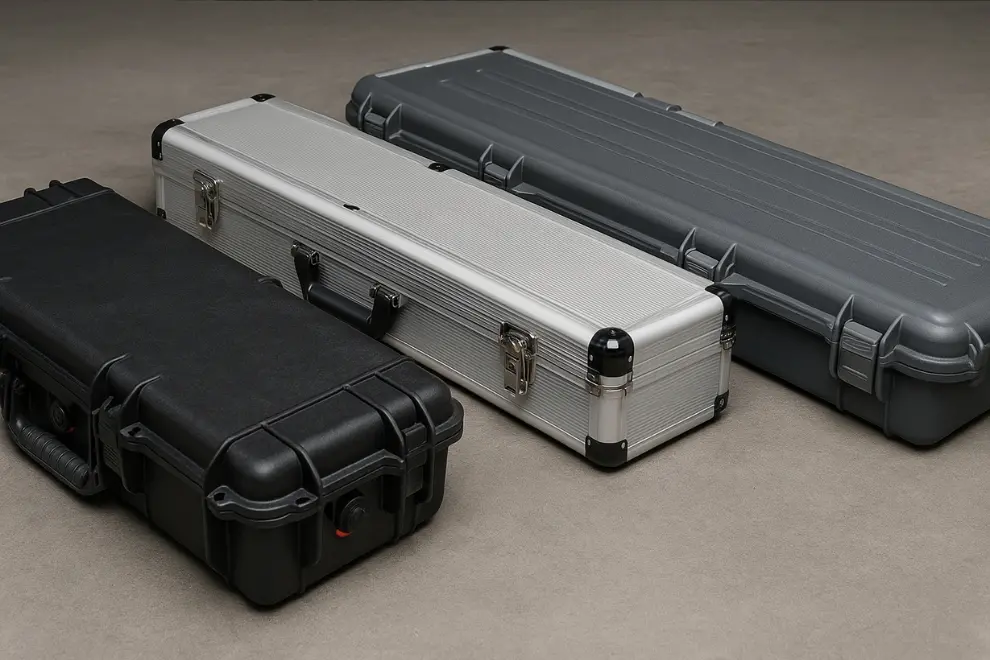
The right hard rifle case should fit the complete rifle setup, hold it securely inside and remain practical for the way you transport it. This 2026 guide explains how to compare internal dimensions, foam, shell construction, locks, weather sealing, pressure valves, wheels and travel requirements before choosing a case.
Quick answer: choose a hard rifle case that passes three tests. First, the rifle, optic and fitted accessories must fit within the usable internal dimensions. Second, the shell, closure and interior must work together to limit external exposure and internal movement. Third, the case's external size, loaded weight and handling features must suit the vehicle, storage space and journey. No single feature or “airline approved” label can replace those checks.
Start with the three-fit test
A hard case is not automatically suitable because it is long enough or described as heavy duty. A useful selection process checks three kinds of fit:
- Equipment fit: the rifle in its carried configuration fits within the usable internal length, width and depth, with room for the intended foam or support system.
- Protection fit: the shell, closure, seal and interior suit the handling conditions and keep the contents from moving into each other or the case wall.
- Journey fit: the external dimensions, loaded weight, handles, wheels and locking arrangement suit the vehicle, carrying distance and any carrier requirements.
This order matters. Starting with a brand, material or protection claim before confirming fit can leave you with a strong case that is too short, too shallow or impractical to move.
1. Measure the rifle in the configuration you will carry
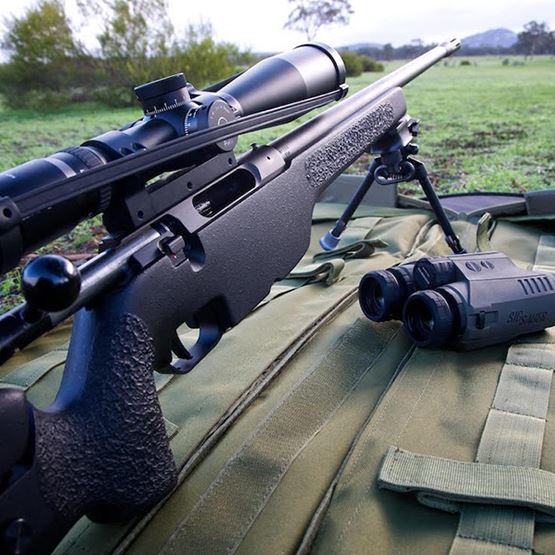
Do not rely on the rifle's catalogue length alone. Measure the complete setup in the configuration in which it will normally be placed in the case, including any fitted optic, bipod, muzzle device, extended control or other protruding accessory.
Record the maximum dimensions
- Overall length: measure from the furthest point at the muzzle end to the furthest point at the stock end.
- Maximum height: measure at the tallest point, which may be the optic or another fitted component rather than the rifle itself.
- Maximum width: account for bolt handles, turrets, bipods and anything else that extends to either side.
- Separate equipment: list anything that must travel in the same case, then decide whether it needs its own supported position.
Compare these measurements with the case's internal dimensions. External dimensions tell you whether the case will fit a vehicle, cupboard or baggage limit, but they do not tell you how much usable room is available inside.
Allow for the interior, not just the shell
The equipment should not be pressed tightly against the case wall. The usable space becomes smaller once base foam, lid foam, side support or a custom insert is installed. There is no universal clearance figure that suits every rifle and foam type, so check the intended interior layout rather than adding an arbitrary number to the rifle length.
Pay particular attention to the optic, adjustment turrets and other sensitive or protruding components. The layout should support the complete setup without concentrating unnecessary pressure on those points.
Use a full-size layout before buying
A simple planning method is to mark the case's stated internal length and width on paper or cardboard, then plot the measured rifle and accessories inside that boundary. This will not confirm depth or foam performance, but it can reveal whether the proposed layout is realistic before you order the case or cut an insert.
If length is the main constraint, compare the dedicated 50-inch rifle case range. For unusually long setups, check the extra-long case options by their actual internal dimensions.
2. Decide what the case needs to carry
Choose the layout before choosing the case size. A single-rifle setup, two-rifle setup and rifle-plus-accessories setup create different width, depth and handling requirements.
- Single rifle: prioritise a close, supportable fit without unnecessary empty space.
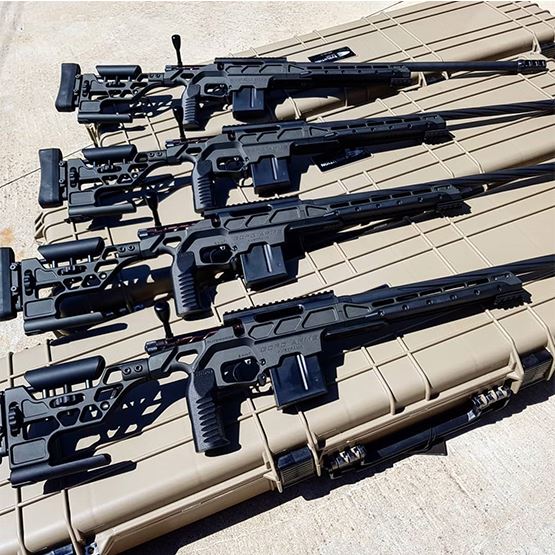
- Two rifles: confirm that both complete profiles fit without the firearms or fitted accessories contacting each other. Review the double rifle case range rather than assuming a wider single case will work.
- Rifle and accessories: plan separate supported positions for the equipment that genuinely needs to travel in the case.
- Changing setup: consider whether the optic, bipod or other equipment is likely to change. A highly specific cut-out is efficient for a stable setup, while a configurable interior may be more practical when the equipment changes regularly.
More capacity is not automatically better. Extra space can increase external size and weight and may create more room for equipment to move if the interior is not configured correctly.
3. Choose an interior that controls movement
A rigid shell is only one part of a protective case. If the rifle and fitted accessories can move freely inside, they may still contact each other or the case interior during handling. The interior should support the equipment and help maintain separation between components.
| Interior type | Best suited to | What to check |
|---|---|---|
| Layered or diced foam | Owners who want to configure an insert around a known setup | Layer depth, base support and whether the finished cut leaves the equipment properly supported |
| Pre-cut foam | A supported equipment model or repeatable layout | Exact equipment and case compatibility rather than a similar-looking model name |
| Custom-cut foam | A unique rifle, optic and accessory configuration | The complete equipment list, case depth, layout approval and access around each item |
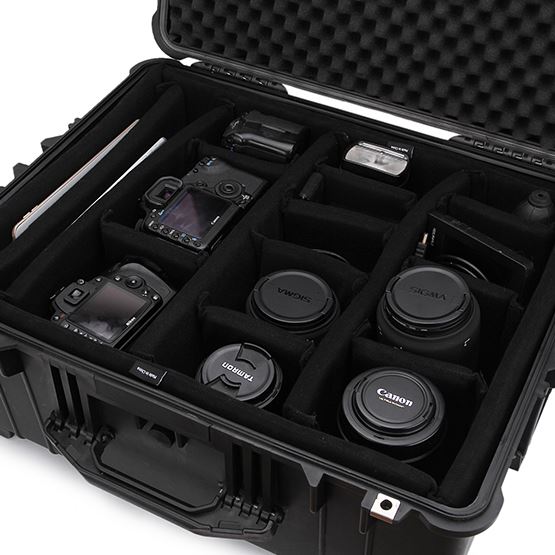
| Configurable dividers or removable insert | Setups that change regularly | Whether the system is available and suitable for the exact case and equipment |
Where a standard layout does not suit the setup, Evolution Gear's custom foam cutting service can create dedicated spaces around the measured equipment. Custom foam is most useful when the configuration is stable enough for a fitted layout and the customer can provide the equipment, design files, or clear photographs and measurements for assessment.
Do not assume that tighter is always better. A useful layout limits movement while allowing the equipment to be inserted and removed without forcing it against the foam or neighbouring items.
4. Compare the complete construction, not just the material name
Material is relevant, but it should not be used as a shortcut for judging the whole case. Wall design, reinforcement, hinges, latches, seal compression and interior support all affect how the case functions.
Polypropylene and other engineered-plastic cases
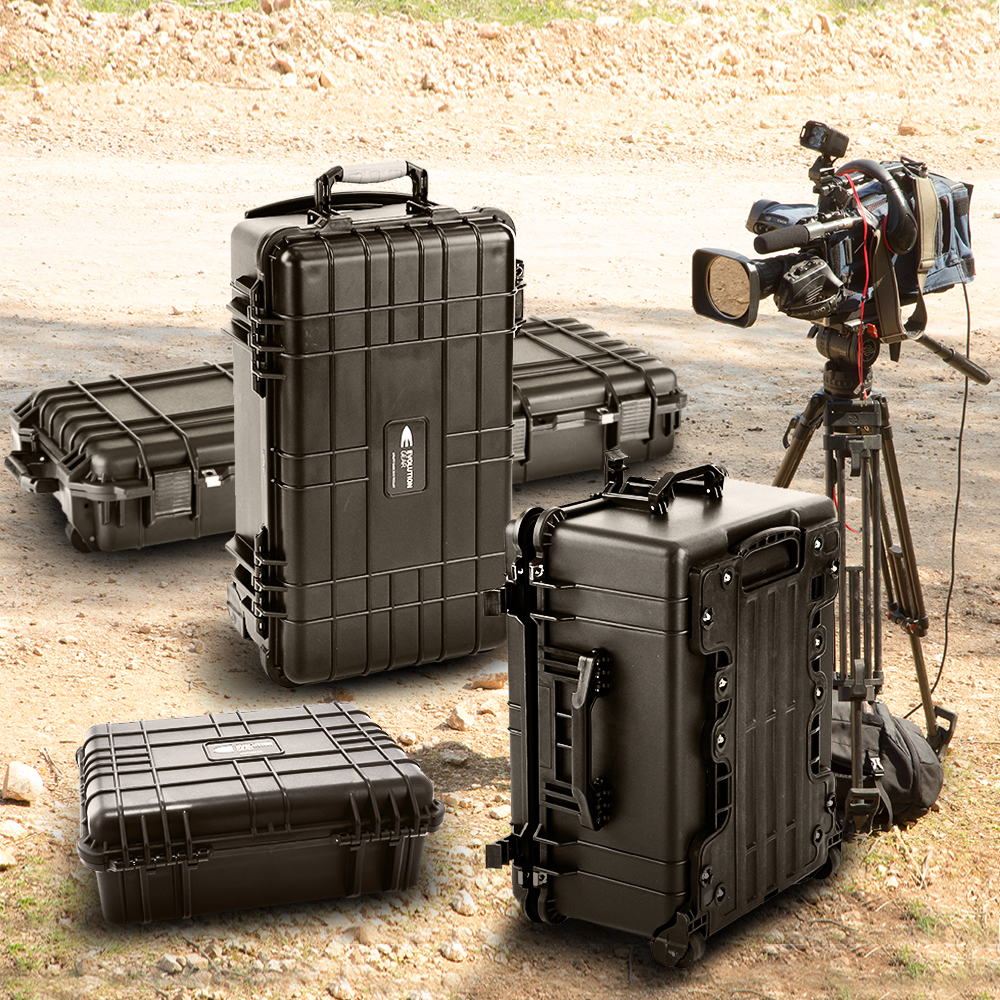
Polypropylene, commonly shortened to PP, is used in Evolution Gear's HD Series rifle cases. Engineered-plastic cases can combine a rigid shell with moulded ribs, recessed hardware and integrated lock points. Compare the exact model's dimensions, weight, closure and published test information rather than assuming every PP case performs identically.
Aluminium cases
Aluminium can provide a rigid enclosure, but construction and wall design still matter. Compare empty weight, corner and hinge design, lock compatibility, the possibility of permanent dents and the availability of a suitable internal support system. GSC shows that people are specifically comparing aluminium rifle cases, but material alone does not determine whether a case fits a particular journey or rifle setup.
Other plastic and composite constructions
Terms such as polymer, plastic and composite cover many different constructions. Treat them as starting descriptions, not performance ratings. If impact, water or dust protection is important, look for model-specific specifications or test evidence.
5. Inspect locking points, latches and hinges
A padlock is only as useful as the part of the case to which it is attached. When assessing a hard rifle case, check the entire closure system:
- Are the padlock points reinforced and integrated into the case structure?
- Does the lid close firmly and evenly around the perimeter?
- Do all latches engage without needing to force or twist the lid?
- Are the hinges protected from obvious snagging or direct knocks?
- Can the intended locks be fitted when the case is fully packed?
- Would an open lock shackle, latch or handle interfere with loading the case into the vehicle or storage position?
Lockable does not mean theft-proof, and owning a lockable transport case does not by itself establish compliance with firearm storage laws. Requirements vary across Australian states and territories, so check the current rules published by the relevant police or regulatory authority for your location and circumstances.
6. Read water and dust claims model by model
A gasket or weather seal can help limit water and dust entry when the lid is correctly closed and the latches apply even pressure. However, a visible gasket does not prove a particular ingress-protection level.
If an IP rating is published, check the complete code for the exact model. The IEC 60529 IP Code classifies degrees of enclosure protection, but different codes represent different tests. Ratings such as IPX7, IPX6 and IP55 are not interchangeable, and the “X” in an IP code means that a rating digit has not been specified in that position. Do not describe an IPX7 case as dust-rated unless separate evidence provides a solids rating.
Published ingress-protection ratings vary across the Evolution Gear HD Series, including IPX7, IPX6 and IP55 depending on the model. Check the exact product specification before purchase rather than applying one rating to the complete range.
Also consider how the case will actually be used. Occasional rain, fine dust, vehicle storage and temporary exposure create different demands from prolonged outdoor exposure. Any firearm or equipment exposed to moisture should still be handled and maintained according to its manufacturer's guidance.
7. Understand what a pressure-equalisation valve does
A sealed case may become harder to open after a change in altitude, air pressure or temperature. A pressure-equalisation valve is designed to help balance pressure between the inside and outside of the case.
This feature can be useful for air travel and changing elevations, but it does not make a case universally accepted by airlines. It also does not replace a suitable seal, secure closure, correct packing or route-specific checks. Confirm that the exact model includes the valve and follow its operating instructions.
8. Calculate loaded weight and handling space
Hard rifle cases can be bulky even when their empty weight appears manageable. Estimate the working load before buying:
Loaded weight = empty case + foam or insert + rifle + every accessory carried inside.
Then consider each stage of the journey:
- Can the loaded case be lifted into the vehicle or storage position?
- Will the external dimensions fit the car boot, ute storage area or other intended space?
- Are wheels useful for the surfaces on which the case will normally move?
- Are the handles positioned for both rolling and lifting?
- Can the case be opened fully in the available space?
- Will the loaded dimensions and weight fit any applicable carrier limits?
Wheels can reduce the effort of moving a heavier case over suitable surfaces, but they do not remove the need to lift it over steps, into a vehicle or onto a baggage scale. External dimensions and empty weight should therefore be treated as buying criteria, not minor specifications.
9. Treat “airline approved” as a prompt to check, not a universal guarantee
Airline and jurisdiction requirements are not identical. The right case for one carrier or route may not satisfy another, and requirements may change.
For example, Qantas currently states that a firearm must be declared, carried in checked baggage and packed separately in a lockable firearms case. Its examples include a heavy-duty padded custom bag, Pelican-style case or metal box. This means Qantas does not universally require a rigid hard case for every firearm journey.
By contrast, the United States TSA requires firearms in checked baggage to be unloaded, declared to the airline and packed in a locked hard-sided container. TSA rules apply to travel within, from or through the United States and should not be presented as the rule for every Australian domestic journey.
Before buying or travelling, check:
- the operating airline, including every codeshare or connecting carrier;
- the departure, transit and destination jurisdictions;
- case, lock, declaration and documentation requirements;
- external dimension and loaded-weight limits; and
- the airline's current process for approval, check-in and collection.
For a focused product pathway, see the hard gun cases for air-travel contexts, then verify the exact journey requirements independently.
10. Match the case to the use case
| Use case | Prioritise | Common oversight |
|---|---|---|
| Regular range or vehicle transport | Accurate internal fit, manageable loaded weight and practical handles | Buying more case than the vehicle or carrying route can accommodate |
| Long-distance or rough vehicle journeys | Rigid construction, secure closure and an interior that limits movement | Focusing on the shell while leaving the equipment loose inside |
| Wet or dusty environments | Exact model sealing and published ingress-protection information | Assuming a gasket or broad “weatherproof” label proves an IP rating |
| Air travel | Lock configuration, external dimensions, loaded weight and route-specific rules | Treating “airline approved” as acceptance by every carrier |
| Scoped or specialised rifle setup | Maximum height and width, supported optic clearance and a suitable foam layout | Checking only the rifle's overall length |
| Two-rifle or accessory-heavy setup | Usable width and depth, component separation and total loaded weight | Assuming a larger empty cavity will organise the equipment automatically |
If portability matters more than rigid external protection for a controlled, short journey, read the dedicated hard rifle case versus soft rifle bag comparison. This guide remains focused on choosing between hard-case options.
11. Final hard rifle case buying checklist
- Measure the complete rifle setup, not only the base rifle.
- Compare maximum length, width and height with usable internal dimensions.
- Account for foam, dividers and clearance around fitted accessories.
- Decide whether the layout must support one rifle, two rifles or additional equipment.
- Choose an interior that limits movement without forcing pressure onto sensitive components.
- Inspect the shell, hinges, latches and reinforced lock points as one system.
- Verify water and dust claims for the exact model and read the complete IP code.
- Check whether a pressure-equalisation valve is included if it matters to the journey.
- Calculate loaded weight and check external dimensions against the vehicle and carrying route.
- Confirm wheels and handles suit the surfaces, lifting points and storage position.
- Verify current airline, jurisdiction and documentation requirements for the complete itinerary.
- Do not assume a transport case satisfies firearm storage laws.
Bottom line: the best hard rifle case is not simply the strongest or largest option. It is the case that fits the complete equipment layout, provides an appropriate combination of shell and internal support, and remains practical for the journey. Browse hard rifle and gun cases by their exact dimensions and features, or contact Evolution Gear if the setup needs a more specific recommendation.
Frequently asked questions
How do I measure a rifle for a hard case?
Measure the rifle in the configuration in which it will be carried. Record its maximum overall length, height and width, including the optic, bipod, muzzle device and other fitted accessories. Compare those figures with the case's internal dimensions and allow for the intended foam or support system.
How much extra room should a rifle case have?
There is no universal allowance that suits every rifle and foam type. The case needs enough usable space for the complete setup and its supporting interior, but not so much unsupported space that the contents can move freely. Check the final layout, especially around the optic and other protruding components.
Is custom foam better than diced foam?
It depends on how stable the equipment layout is. Diced foam can be configured by the owner and may suit a straightforward setup. Custom foam is more useful when the rifle, optic and accessories have a specific configuration that needs dedicated positions. A configurable interior may be preferable when the setup changes regularly.
Are all hard rifle cases waterproof and dustproof?
No. Seals and ingress-protection ratings vary by model. Check the complete published rating for the exact case and do not assume that an IPX water rating also includes a dust rating.
Do I need a pressure valve on a hard rifle case?
Not for every use. A pressure-equalisation valve can be helpful when a sealed case experiences changes in altitude, pressure or temperature. It does not make the case universally airline approved, so confirm both the case specification and the journey requirements.
Can I take a hard rifle case on a plane?
Possibly, but acceptance depends on the airline, route, jurisdictions and packing arrangements. Check the current requirements for every operating carrier and location before travelling. Do not rely on a general “airline approved” label as a guarantee.
Does a lockable hard rifle case satisfy firearm storage laws?
Not necessarily. A transport case should not automatically be treated as legally compliant permanent storage. Firearm storage and transport requirements vary by jurisdiction, so check the current guidance from the relevant police or regulatory authority.
Should I choose a hard rifle case or a soft rifle bag?
Choose according to the journey. A hard case provides a rigid external enclosure and is better suited when external impact, stacking, weather exposure or carrier handling are material concerns. A soft rifle bag is lighter and easier to carry for controlled trips where those risks are lower. See the dedicated hard-versus-soft comparison for the full decision.