
 1300 11 00 96
How Professional Videographers Store Multi-Camera Setups
Author: Evolution Gear Date Posted: 16 June 2026
TL;DR
- Multi-camera setups need clear storage systems because there are more bodies, lenses, batteries, cards, cables, mounts, and accessories to manage.
- The best setup gives every item a fixed place so teams can pack faster, avoid missing gear, and reduce movement during transport.
- Hard cases, padded dividers, and foam inserts all help protect camera gear, but the right choice depends on how fixed or flexible the kit is.
- For changing video kits, padded dividers are useful. For repeat setups, custom foam can create a tighter and more predictable layout.
Why Multi-Camera Storage Needs a Proper System
Professional videographers often work with more than one camera body, lens, battery, charger, memory card, monitor, microphone, cable, and mounting part. When all of that gear moves between studios, vehicles, outdoor locations, and client sites, storage becomes part of the production workflow.
Good camera equipment storage is not just about keeping gear tidy. It helps protect expensive equipment, makes setup faster, reduces missing items, and gives every team member a clear packing system to follow.
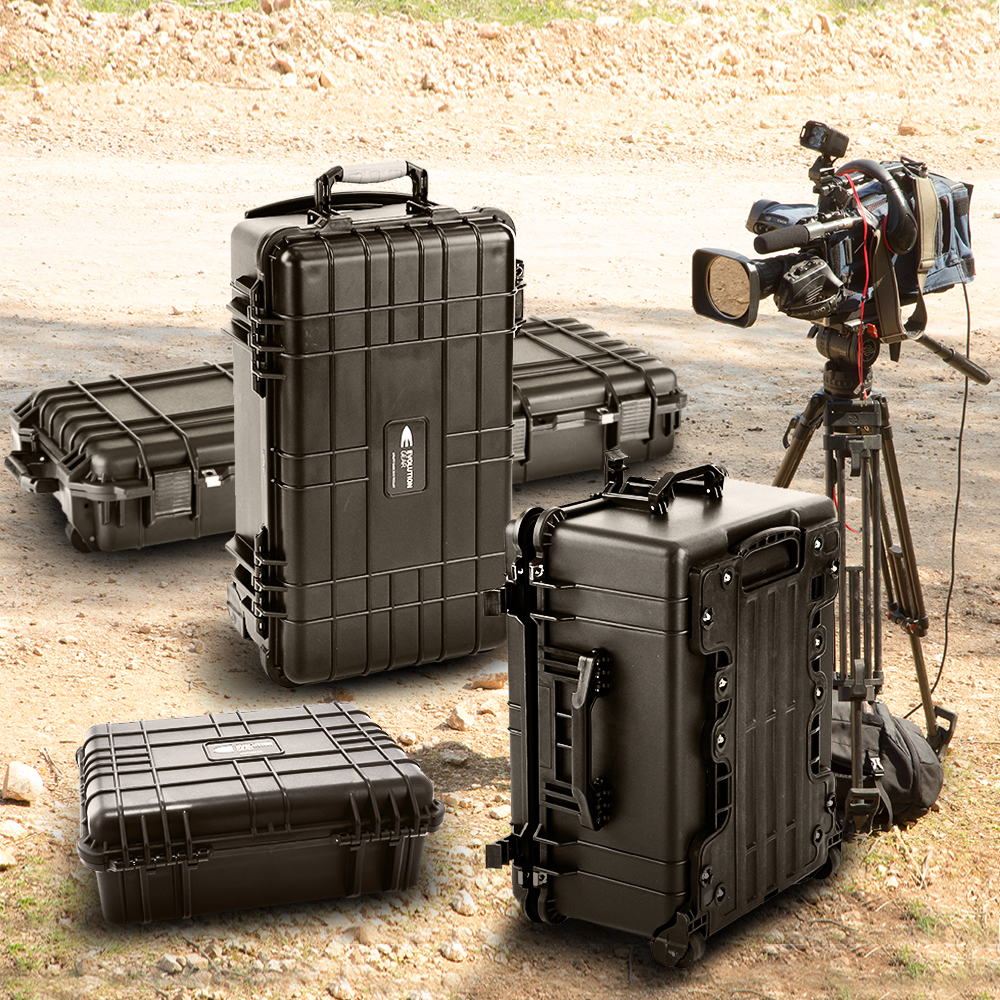
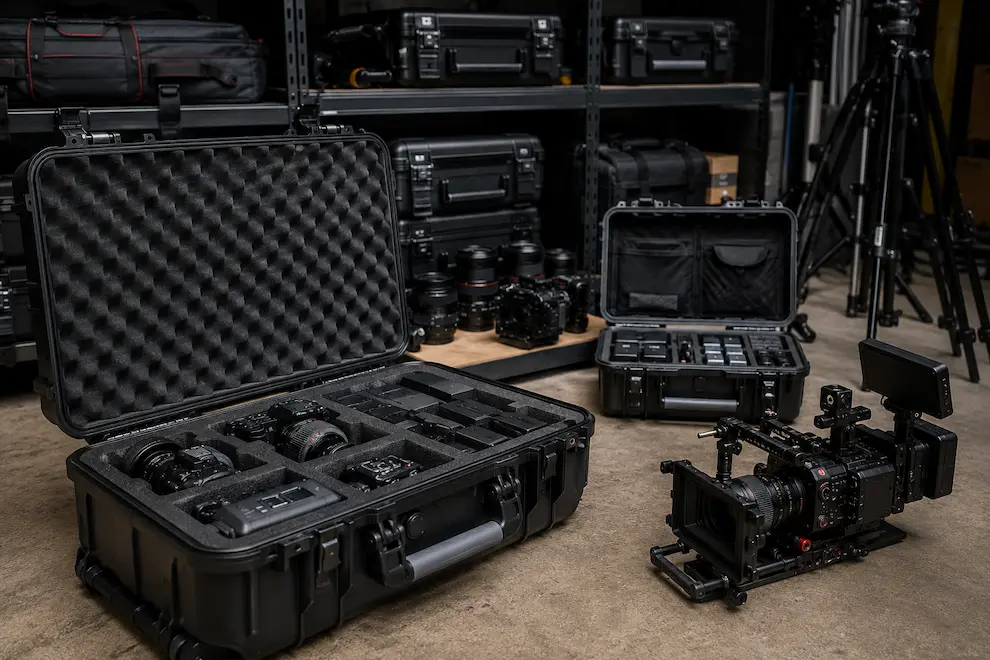
For multi-camera setups, the goal is simple: every item should have a clear place, and the case should match the way the kit is used. That may mean a hard case with padded dividers, a custom foam layout, a trolley case for heavier loads, or a mix of cases for camera, audio, lighting, and support gear.
If you are building a better storage setup, Evolution Gear’s camera cases, padded dividers, and custom foam cutting options are the most relevant places to start.
Planning Gear Before Every Shoot
A strong multi-camera storage system starts before the case is packed. Professional teams usually plan the kit around the shoot, not around every item they own.
This helps avoid overpacking and makes it easier to build a storage layout that matches the work. A corporate interview shoot, live event, drone shoot, product video, and outdoor documentary job may all need different gear.
Before packing, check:
- which camera bodies are needed
- which lenses match the shot list
- which batteries, chargers, and media cards are required
- whether monitors, cages, handles, microphones, or mounts are needed
- which items should travel together in the same case
- which items should be separated to reduce damage risk
A shoot-specific checklist also helps teams spot missing items before they leave. This is especially useful when several people use the same equipment pool.
Camera Case Setup and Internal Organisation
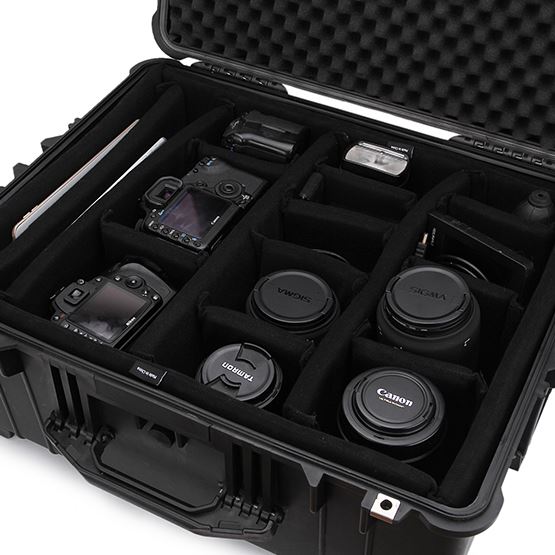
A proper camera case setup gives each item a clear position. This reduces movement inside the case and makes the kit easier to check at a glance.
For multi-camera work, the internal layout matters as much as the outer case. A strong outer shell helps with impact and handling, but the internal layout controls how the gear sits during storage and transport.
A good internal layout should:
- keep camera bodies away from heavy accessories
- separate lenses so they do not rub against other gear
- hold batteries, cards, and small parts in set positions
- make commonly used items easy to reach
- show missing gear quickly when packing down
- avoid empty spaces that let equipment shift
For changing kits, padded dividers are often useful because the layout can be adjusted from shoot to shoot. For fixed kits, foam inserts may provide a more exact fit.
Storage for Multi-Camera Production
Multi-camera production needs more control than a single-camera kit. More gear means more chances for missing parts, mixed accessories, flat batteries, or loose items.
The best storage systems group equipment in a way that matches the workflow. Some teams store each camera body with its key accessories. Others separate camera bodies, lenses, batteries, media, audio, and support gear into different case sections.
Common storage approaches
| Storage approach | Best for | Main benefit |
|---|---|---|
| Camera-by-camera layout | Small crews and repeat setups | Each camera kit stays together |
| Gear-type layout | Larger teams with shared gear | Bodies, lenses, batteries, and media are easy to count |
| Hybrid layout | Flexible production work | Core items stay fixed while accessories can change |
| Custom foam layout | Fixed high-value kits | Each item has a precise position |
| Padded divider layout | Changing camera setups | The case can be reconfigured as gear changes |
Safe Transport of Multi-Camera Kits
Transport is one of the highest-risk stages for video equipment. Camera bodies, lenses, monitors, and accessories can be damaged if they shift, press against each other, or sit loose inside a vehicle.
A transport-ready case should reduce movement and make the kit easier to handle. For heavier multi-camera kits, trolley cases can help when gear is moved through car parks, studios, venues, airports, workshops, or larger locations.
Transport packing tips
- lock or close all cases properly before moving them
- keep heavy items away from delicate camera bodies and lenses
- use foam or dividers to reduce internal movement
- avoid loose cables or mounts pressing against lenses and screens
- check that wheels, handles, latches, and dividers are in good condition
- keep the case layout consistent so the team can pack quickly
For related travel advice, Evolution Gear’s guide on camera gear travel protection is a useful supporting resource.
Environmental Storage Factors
Storage choices should match the real shooting environment. A clean studio kit does not face the same risks as gear used outdoors, near dust, in changing weather, or in vehicles for long periods.
Common environmental risks
- Dust: can build up around lenses, mounts, cables, and accessories.
- Moisture: can create problems for camera gear if equipment is packed wet or stored poorly.
- Heat: can affect batteries and sensitive equipment if gear is left in hot vehicles or direct sunlight.
- Rough ground: can increase handling risk when gear is moved across outdoor locations.
This is where hard cases, foam layouts, and good packing habits work together. The case protects from the outside, while the internal layout protects the gear from movement inside the case.
Choosing the Right Camera Storage Solution
There is no single best case for every videographer. The right choice depends on the size of the kit, how often it moves, whether the layout changes, and how much protection the gear needs.
Camera cases
Camera cases are a strong starting point for storing bodies, lenses, batteries, accessories, and smaller production gear.
Camera and drone cases
If your shoots include drones, cameras, controllers, batteries, and mixed field gear, the wider camera and drone cases range may be more relevant.
Trolley cases
Trolley cases are useful when the kit is heavy or moved often. They can suit larger multi-camera setups, lighting accessories, monitors, and mixed production equipment.
Custom foam
Custom foam is useful when the same gear travels together often and needs a precise layout. It can also help teams spot missing equipment because every item has a visible position.
Padded dividers
Padded dividers are useful when the kit changes often. They give videographers more flexibility than a fixed foam layout.
Long-Term Equipment Protection
Good storage can help camera gear stay organised and ready for work over time. It can also reduce avoidable wear caused by loose packing, repeated rubbing, poor stacking, or accessories pressing against delicate items.
Long-term protection depends on both the case and the way the team uses it. Even a strong case will not solve every problem if gear is packed loose or the layout is ignored after each shoot.
Useful long-term habits
- return each item to the same place after use
- keep batteries, cards, and cables in clear sections
- check foam and dividers for wear
- avoid packing damp or dusty gear straight into long-term storage
- review the layout when new equipment is added
- keep a simple inventory for larger kits
On-Set Workflow and Team Discipline
Once filming starts, storage becomes part of the workflow. If gear is spread across bags, benches, vehicles, and loose compartments, small delays can build up quickly.
A clear storage system gives the team a shared method. Camera bodies, lenses, batteries, cards, cables, and mounts all go back to known positions. This makes pack-down faster and reduces the chance of leaving items behind.
Good team habits include:
- assigning clear case sections for each type of gear
- returning used accessories to the same place
- checking batteries and media before packing down
- keeping empty slots visible so missing items are easy to spot
- using the same pack-down routine after every shoot
These habits are simple, but they matter most when a shoot is busy, time is tight, or more than one person is handling the kit.
Common Storage Mistakes Videographers Make
Even experienced videographers can run into storage problems when shoots are rushed or the kit keeps changing. Most issues come from poor layout, overpacking, or failing to update the storage system as equipment changes.
Mistakes to avoid
- leaving camera bodies or lenses loose inside a case
- mixing unrelated accessories without separation
- overloading one case instead of splitting the kit
- using a fixed foam layout for a kit that changes every job
- using loose bags when the gear needs stronger transport protection
- forgetting to check batteries, memory cards, and cables before leaving
- storing dusty or damp gear without cleaning it first
Maintenance and Long-Term Storage Care
Storage and maintenance work together. A case protects the gear, but it should also be checked and cleaned as part of the production process.
Dust, dirt, moisture, loose foam, damaged dividers, and worn case parts can all reduce how well the system works. A short check after each shoot can prevent bigger problems later.
What to check regularly
- case latches, handles, wheels, and hinges
- foam inserts and divider walls
- loose accessories or missing small parts
- dust or debris inside the case
- signs of pressure points on lenses, screens, or accessories
- whether the layout still matches the current camera kit
Conclusion
Professional videographers store multi-camera setups by building a clear system around the way the gear is actually used. The best storage setup protects the equipment, keeps each item organised, and makes it easier for the team to work quickly on location.
For fixed kits, custom foam can provide a precise layout. For changing kits, padded dividers can offer more flexibility. For heavier setups, trolley cases can make transport easier. The right choice depends on the gear, the shoot type, and how often the kit moves.
Explore Evolution Gear’s camera cases, trolley cases, padded dividers, and custom foam cutting options to build a storage system that suits your multi-camera setup.
FAQs
What is the best way to store multi-camera setups?
The best way is to use a structured case layout where every camera body, lens, battery, card, and accessory has a clear place. This can be done with foam inserts, padded dividers, or a mix of both.
Should videographers use foam or padded dividers?
Use foam when the same gear travels together often and needs a fixed layout. Use padded dividers when the kit changes from shoot to shoot and the case needs more flexibility.
How do professionals organise video gear for travel?
Professionals usually pack gear by camera kit, gear type, or shoot workflow. The goal is to reduce movement, make items easy to find, and make missing gear obvious during pack-down.
Are trolley cases useful for video production gear?
Yes, trolley cases can be useful when a video kit is heavy, bulky, or moved often. They can make it easier to move cameras, lenses, monitors, accessories, and support gear between locations.
How can storage improve on-set workflow?
Good storage reduces setup time because the team knows where each item belongs. It also makes pack-down easier and helps prevent missing batteries, cards, cables, or accessories.